



SM16704 Pixel Protocol
The SM16704 is a single-wire RGBW pixel IC running 8-bit-per-channel PWM at 1200Hz across a wide 5 to 24V supply range.
Specifications
| Specification | Detail |
|---|---|
| Clock Type | Data-Only |
| Color Resolution | 8 Bits |
| Physical Package | SOP8 |
| RGB | No |
| RGBW | Yes |
| Output Pixel Voltage | 5 - 24V |
| PWM Rate | 1200Hz |
| Suitable Camera | Up to 40fps |
| Redundant Data Line | No |
Strengths
- Single-wire, self-clocking wiring: one data conductor per segment with no clock line to route, terminate, or fail, keeping harnesses and connectors simple.
- 8-bit-per-channel RGBW control with a dedicated white channel, giving cleaner whites and pastels than RGB-only mixing while retaining full colour.
- Wide 5 to 24V pixel supply range provides headroom for longer runs and eases voltage-drop planning compared with fixed low-voltage parts.
Limitations
- As a timing-sensitive single-wire protocol it depends on precise pulse widths; long leader cables or marginal level-shifting can corrupt data, and with no redundant data line a single failed IC drops every pixel downstream.
- The 1200Hz PWM rate is adequate rather than exceptional: comfortably camera-safe to the rated 40fps, but with less refresh headroom than higher-rate parts for very high-speed cinematography.
Overview
The SM16704 is a data-only, single-wire addressable pixel driver: each IC regenerates and forwards the data stream down the chain with no separate clock line, so timing is self-clocked and cabling stays simple. Every IC drives an RGBW LED at 8 bits per channel and refreshes at 1200Hz, which is comfortably flicker-free at the 40fps this part is rated for. Housed in a SOP8 package, it accepts a wide 5 to 24V pixel supply, giving useful headroom for voltage-drop planning on longer runs. The manufacturer is not firmly established.
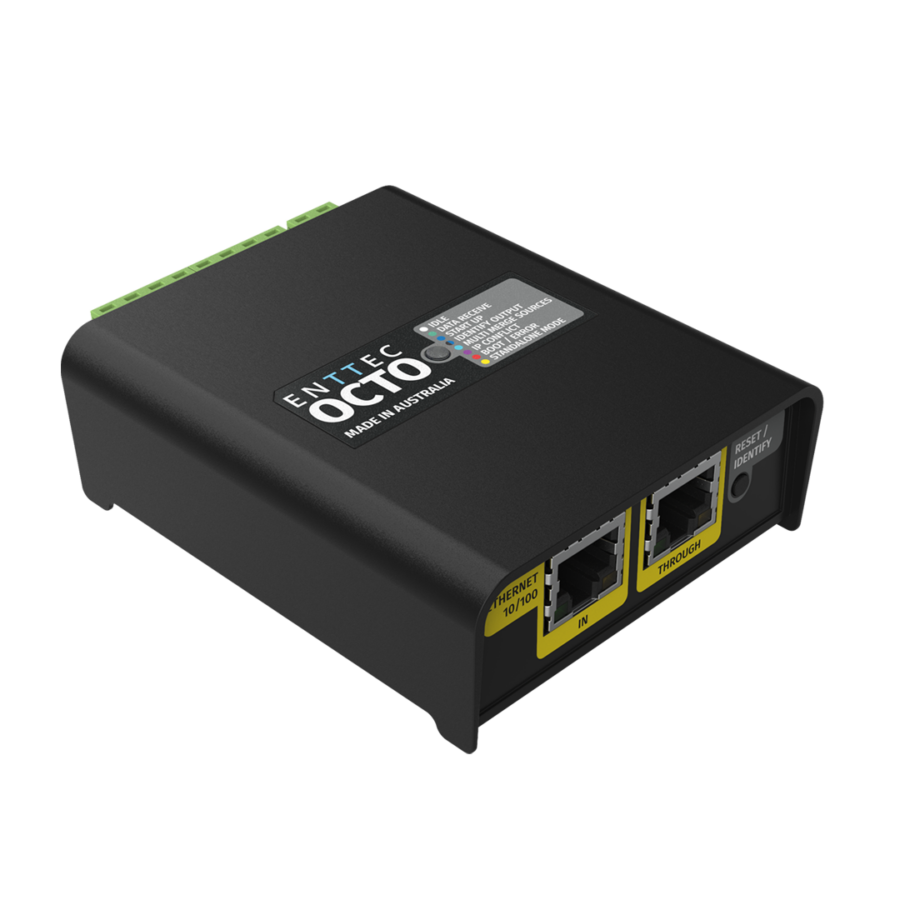
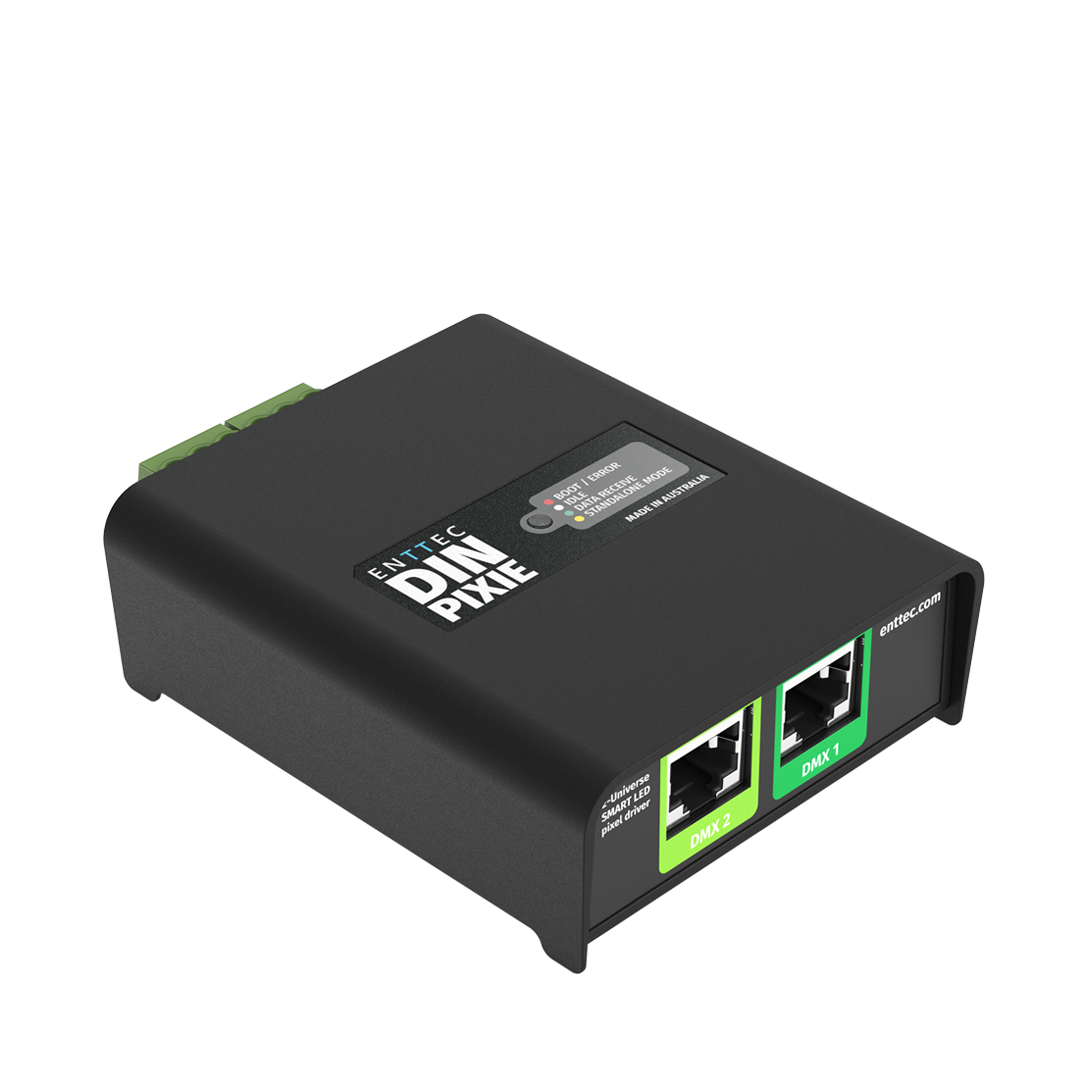
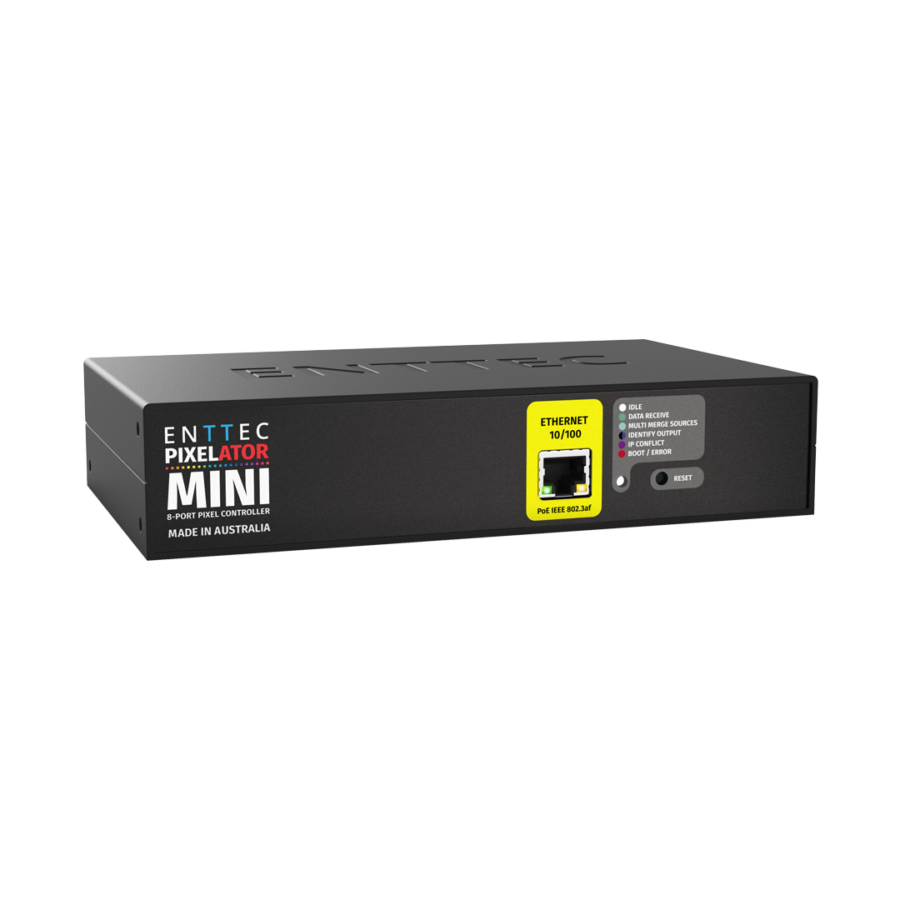
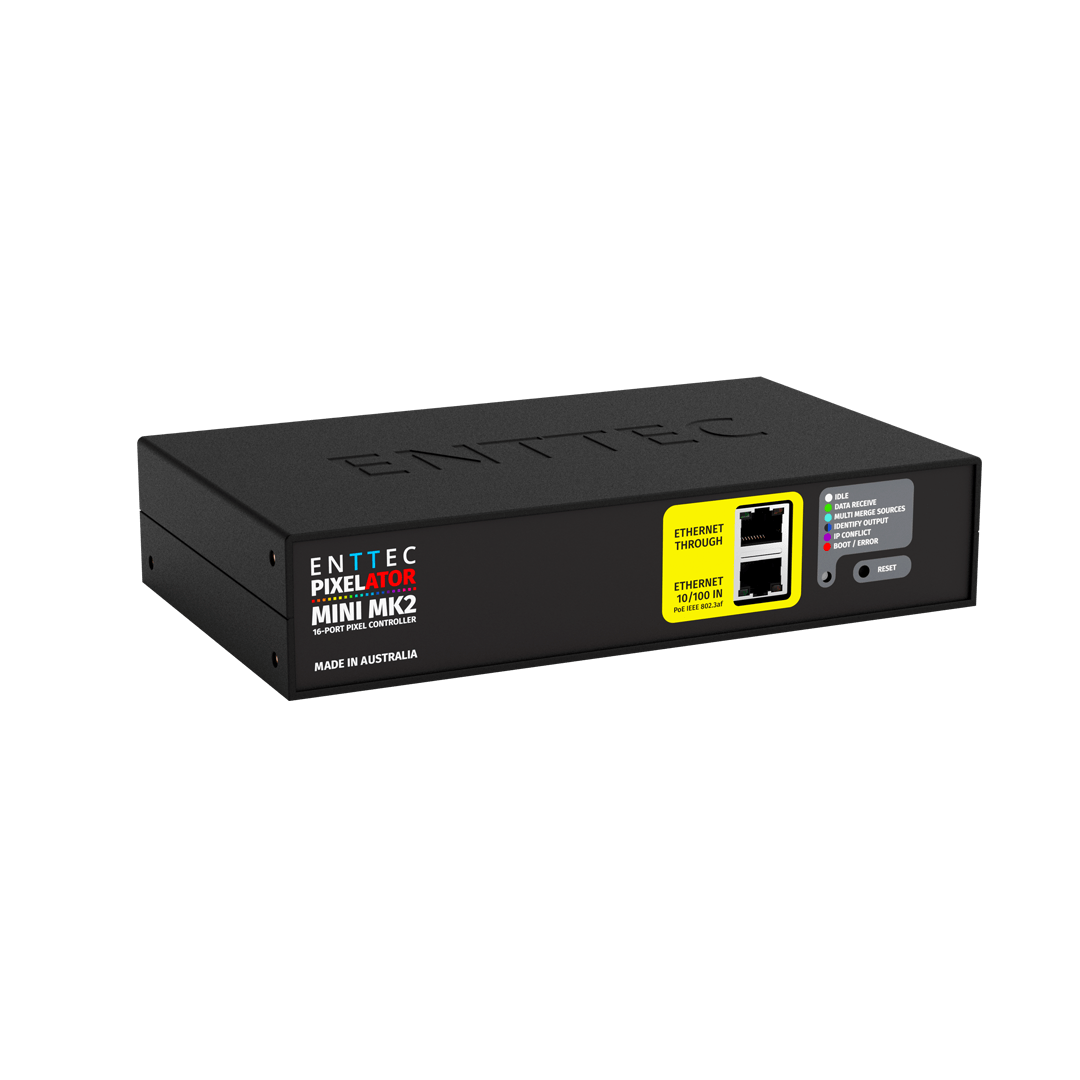
Mapping an installation? ELM, ENTTEC's free LED pixel mapping software, drives the controllers above over Art-Net and sACN, from a single fixture to building-scale maps.
ENTTEC has been engineering lighting control in Australia since 1999, and shipping LED pixel controllers since the original Pixelator in 2014.