



WS2818B Pixel Protocol
Manufacturer: Worldsemi
A single-wire, individually addressable 8-bit RGB pixel IC with a redundant backup data line that keeps a run going if one pixel fails.
Specifications
| Clock Type | Data-Only |
| Color Resolution | 8 Bits |
| Physical Package | SOP8 |
| RGB | Yes |
| RGBW | No |
| Output Pixel Voltage | 5 - 12V |
| PWM Rate | 2000Hz |
| Suitable Camera | Up to 67fps |
| Redundant Data Line | Yes |
Strengths
- Redundant data line: a backup signal path bypasses a failed pixel, so one dead IC does not kill the whole downstream section, a real reliability gain on long single-wire runs.
- Single-wire wiring keeps cabling simple and low-cost: data and timing share one conductor, with no separate clock line to route or fail.
- Flexible 5 to 12V pixel supply, and a 2000Hz PWM rate that is comfortably flicker-free for the rated capture up to 67fps in typical broadcast and video work.
Limitations
- As a data-only single-wire protocol it is timing-sensitive: signal integrity depends on tight pulse timing, so line length, connector quality, and level-shifting matter, and a marginal signal can corrupt the chain.
- 8 bits per channel (256 levels) is standard but can show visible banding on slow, deep fades, and the 2000Hz refresh, while camera-safe for the rated frame rate, leaves less headroom than higher-PWM parts for very fast shutter or slow-motion capture.
Overview
The WS2818B is a single-wire (self-clocking) addressable RGB pixel driver in the WS281x family, carrying data and timing on one line with no separate clock. Each IC latches 24-bit colour (8 bits per channel), reshapes the signal, and forwards it down the chain. Its defining feature is a redundant data line: a backup path routes the signal past a failed pixel so a single dead IC does not black out the rest of the run. It operates across a 5 to 12V pixel supply and refreshes at 2000Hz. ENTTEC is not affiliated with Worldsemi.
Compatible ENTTEC controllers
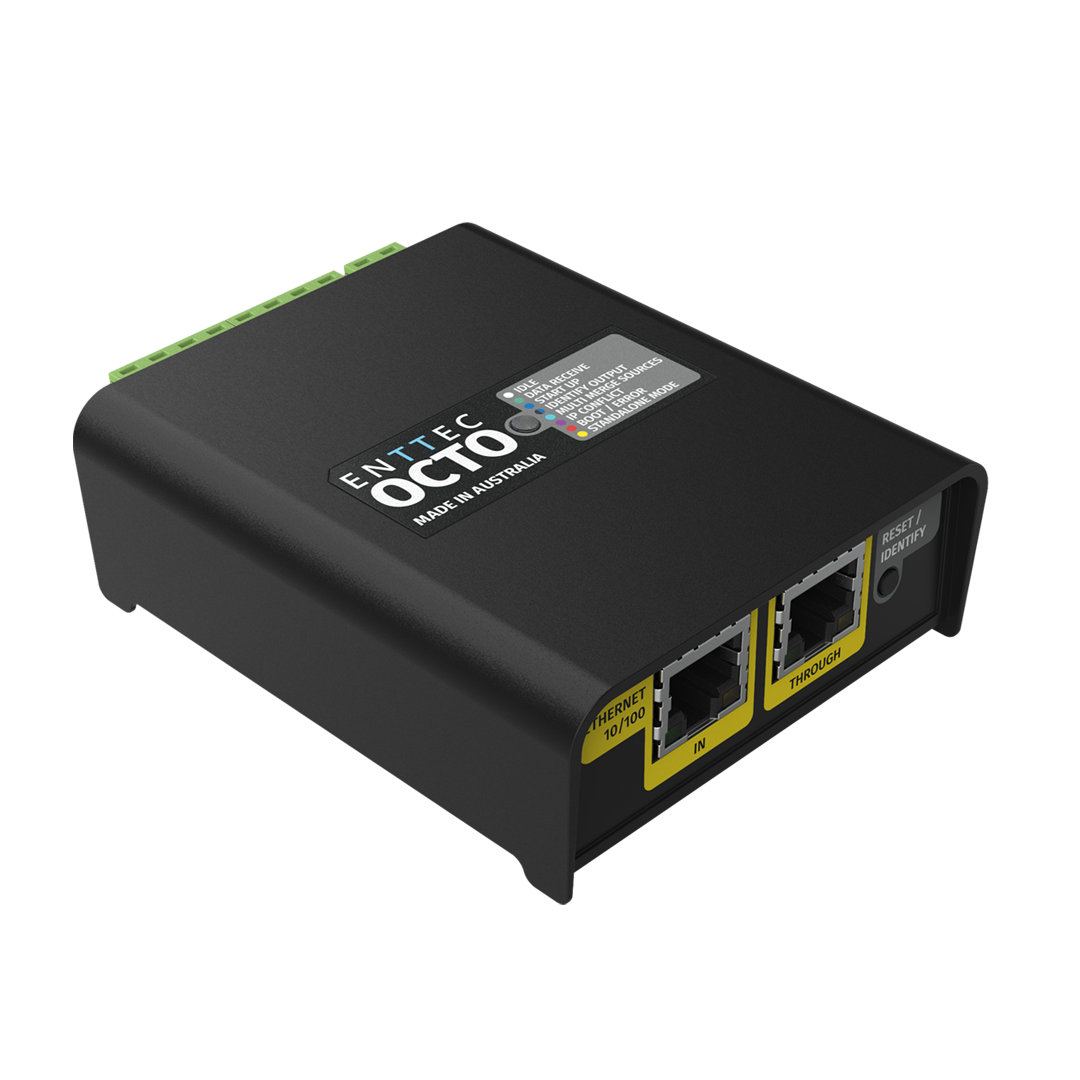
Sku: 71521
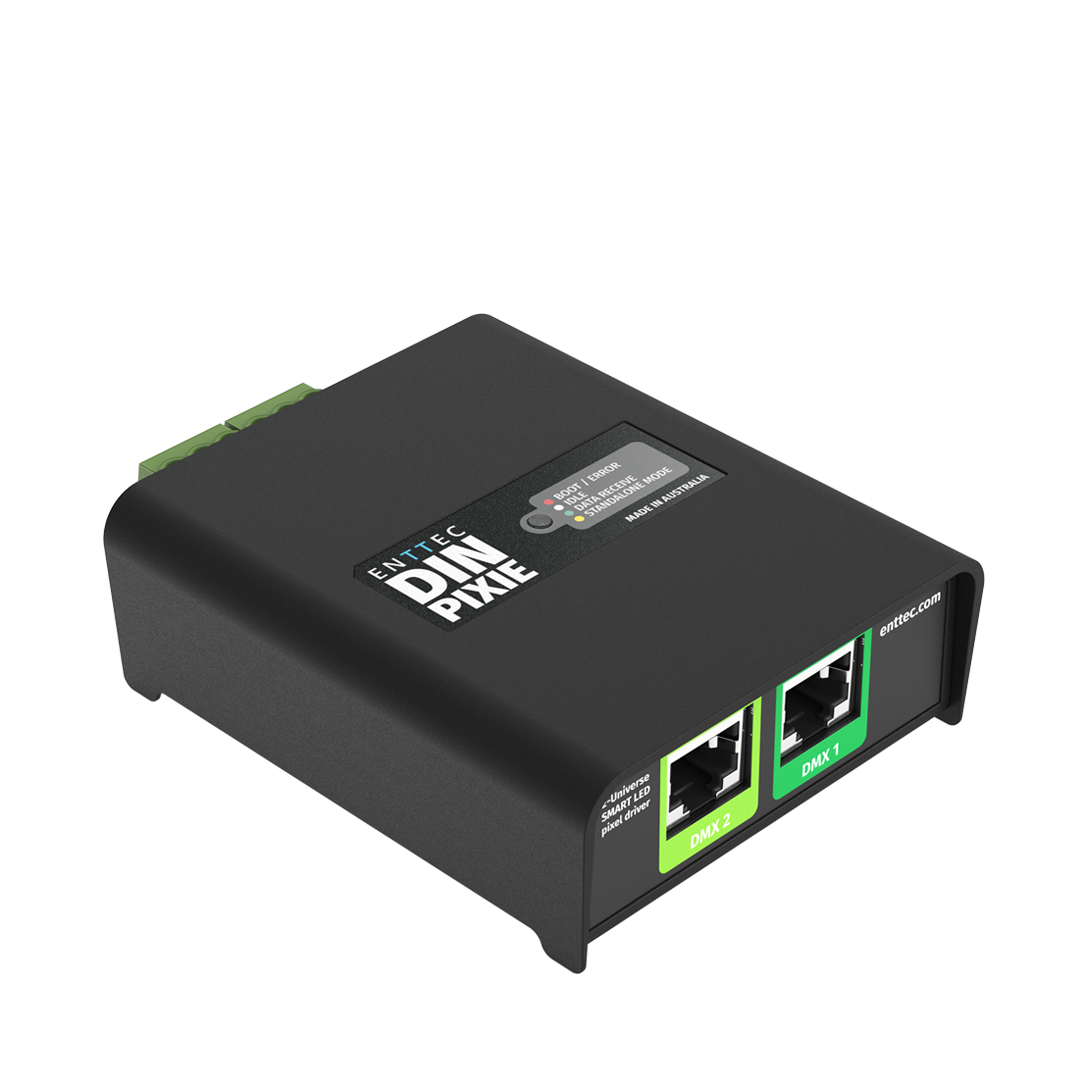
Sku: 73539
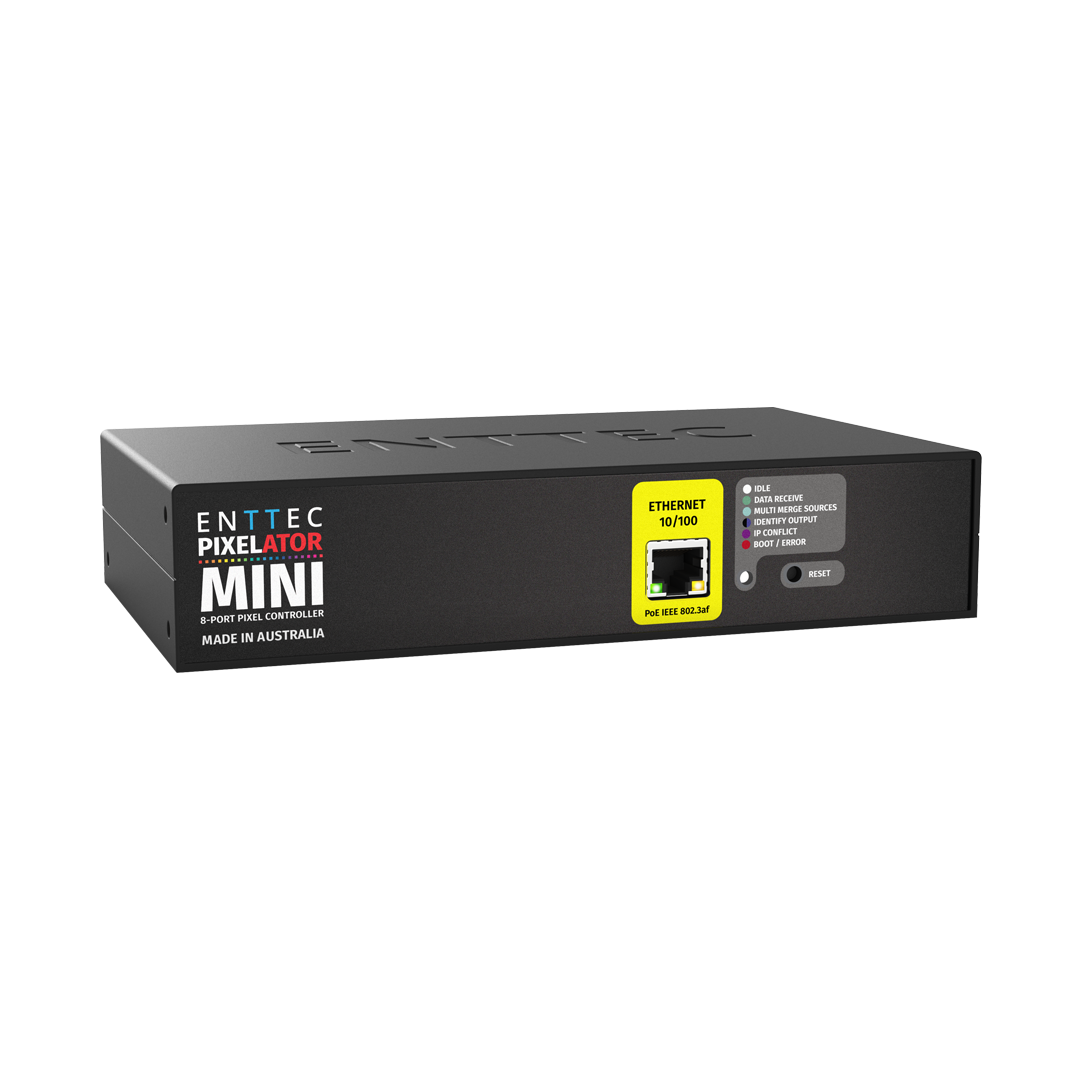
Sku: 70067
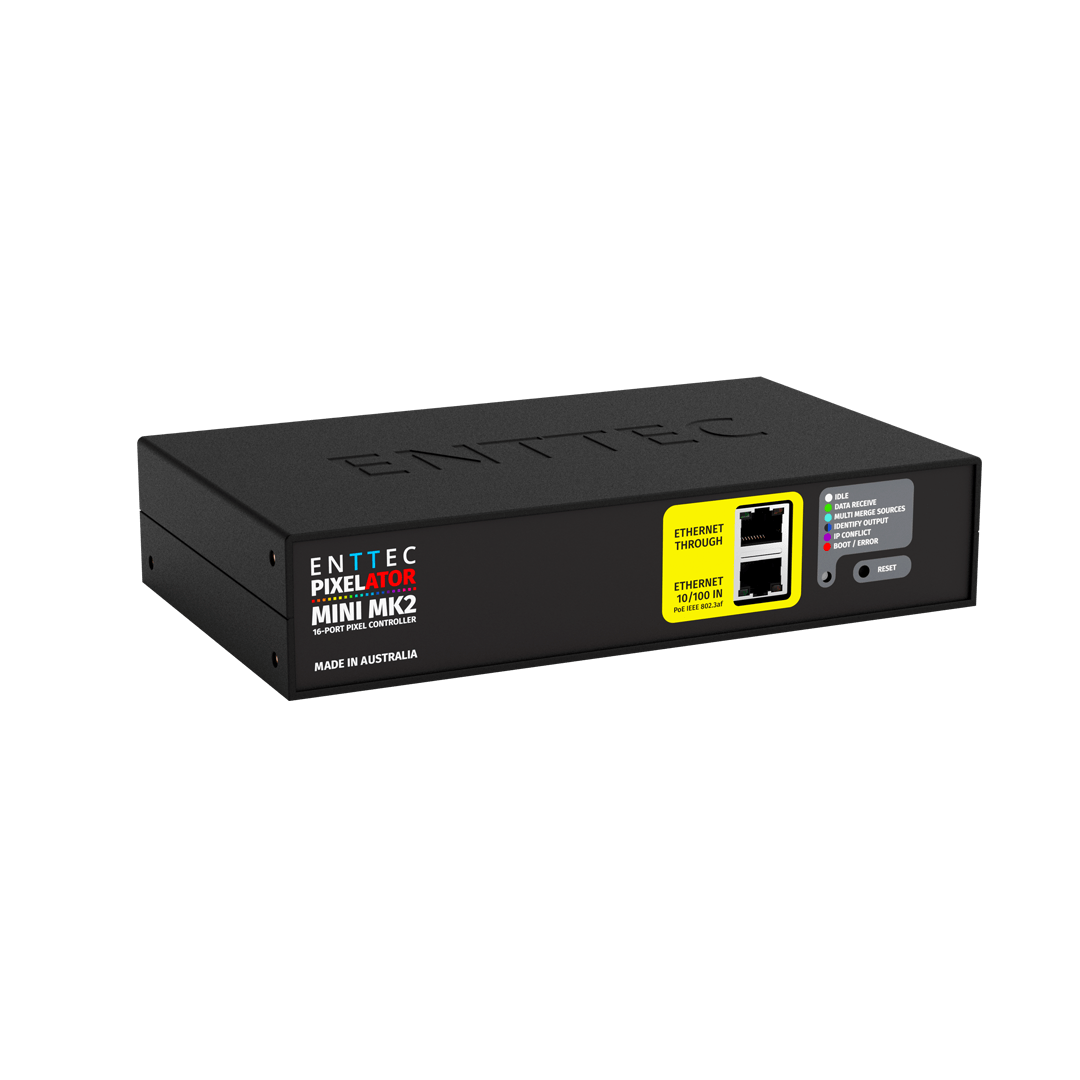
Sku: 70068
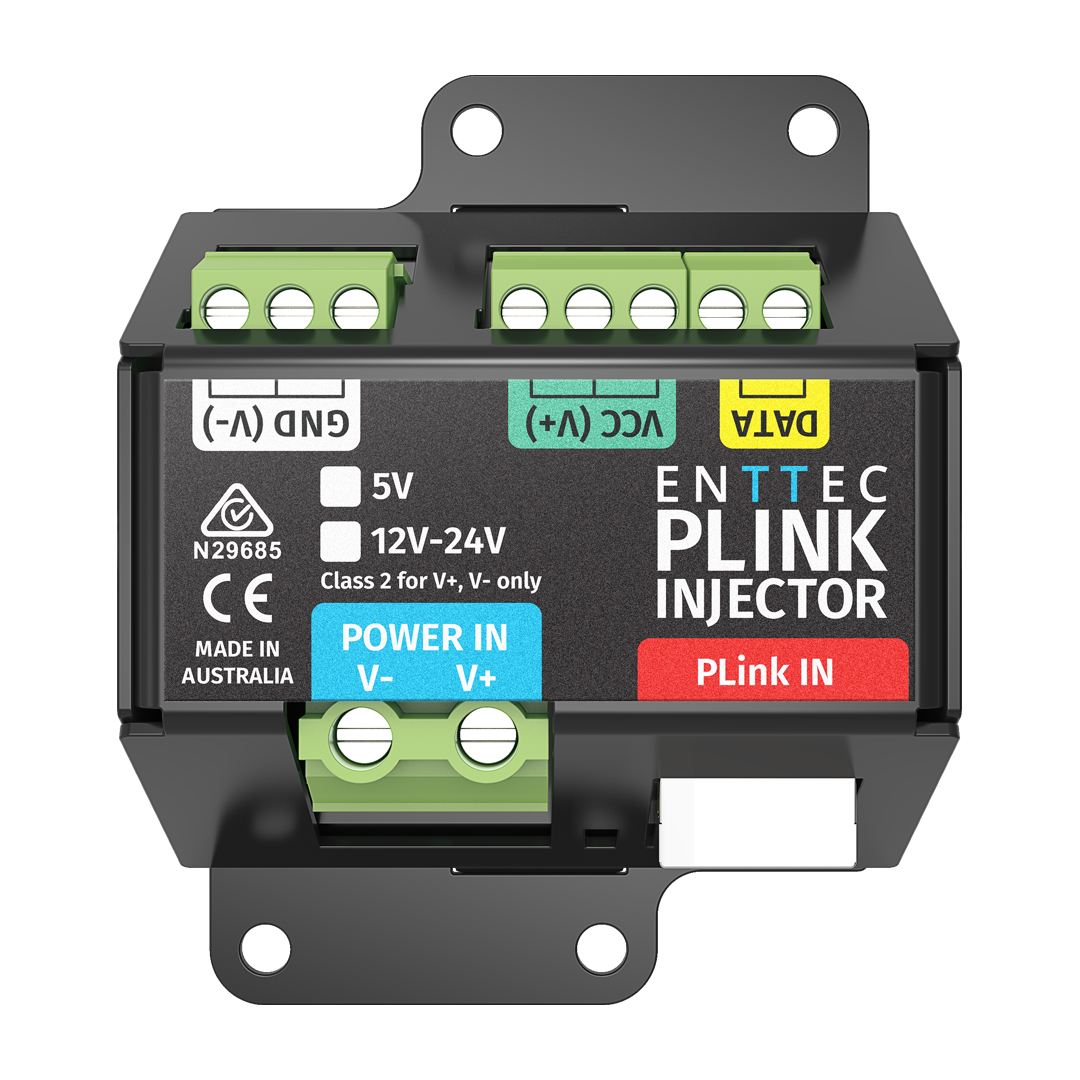
Sku: 73-545
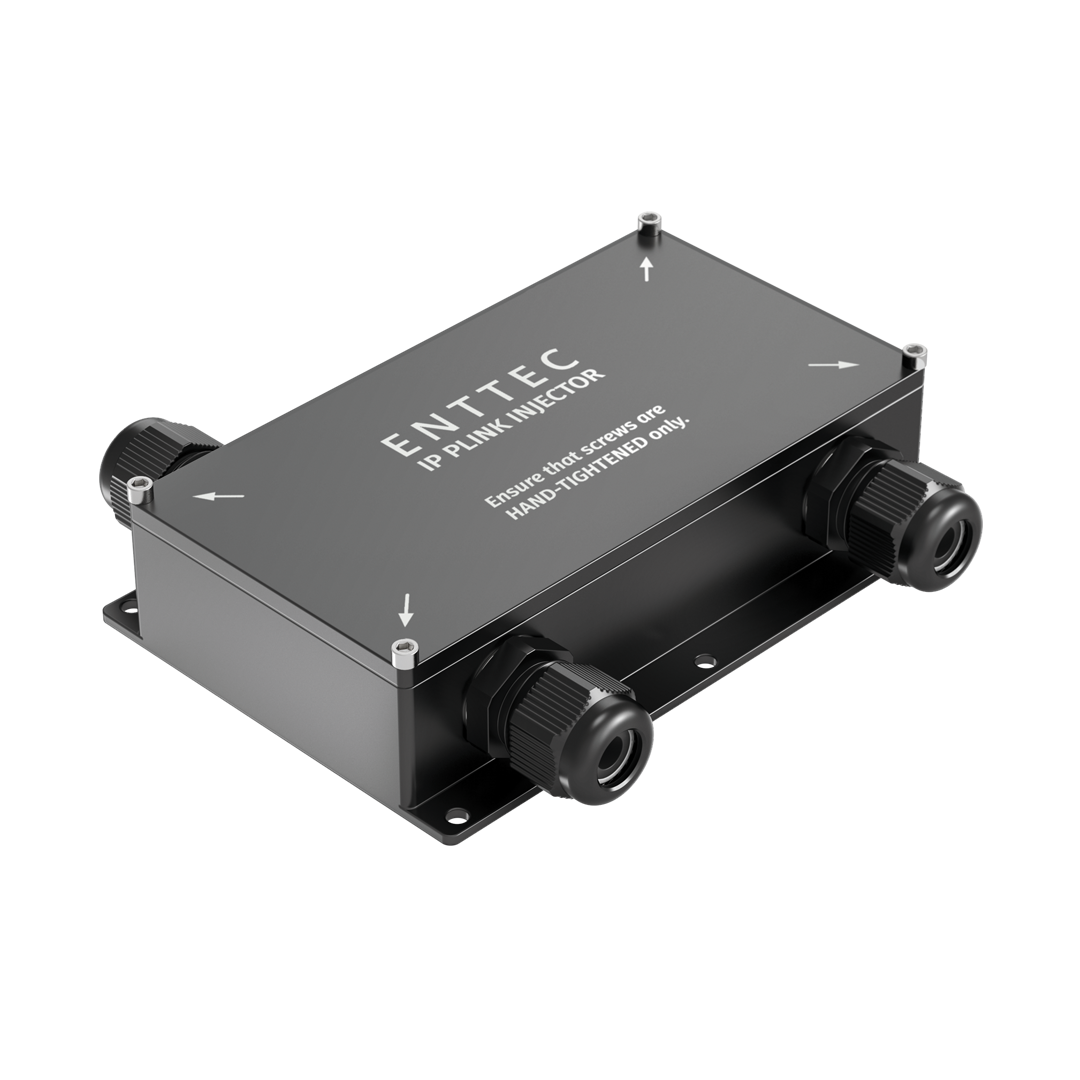
Sku: 73924
ENTTEC has been engineering lighting control in Australia since 1999, and shipping LED pixel controllers since the original Pixelator in 2014.