



TM1803 Pixel Protocol
Manufacturer: Titan Micro Electronics
A single-wire, self-clocking 8-bit RGB pixel protocol with an integrated per-LED controller, running at a modest 400Hz PWM rate.
Specifications
| Clock Type | Data-Only |
| Color Resolution | 8 Bits |
| Physical Package | SOP8 |
| RGB | Yes |
| RGBW | No |
| Output Pixel Voltage | 5 - 24V |
| PWM Rate | 400Hz |
| Suitable Camera | Flickering may be visible |
| Redundant Data Line | No |
Strengths
- Single data line keeps installation and cabling simple: no separate clock conductor to route, terminate, or shield.
- Wide 5V to 24V pixel-voltage range gives flexibility across low-voltage strips and longer higher-voltage runs where voltage drop is a concern.
- Integrated per-LED controller with 8-bit-per-channel (24-bit) colour gives standard, predictable RGB rendering and daisy-chained addressing.
Limitations
- The 400Hz PWM rate is low: fine for the naked eye but not comfortably flicker-free on camera, which matches this chip being rated likely to show visible flicker on camera. Avoid it for broadcast, film, or any on-screen application.
- As a data-only chip with no redundant data line, timing tolerance is tight and there is a single point of failure: one dead pixel or bad joint blanks every LED downstream of it.
Overview
The TM1803 is a single-wire, data-only RGB pixel driver: each LED carries one integrated controller that latches its 24-bit (8 bits per channel) colour word, then forwards the remaining data down the chain. Because timing lives on the single data line, wiring stays simple, but the protocol is timing-sensitive and offers no redundant data path, so a broken link stops the run beyond it. It accepts a wide 5V to 24V pixel supply and is packaged in SOP8. ENTTEC is not affiliated with Titan Micro Electronics.
Compatible ENTTEC controllers
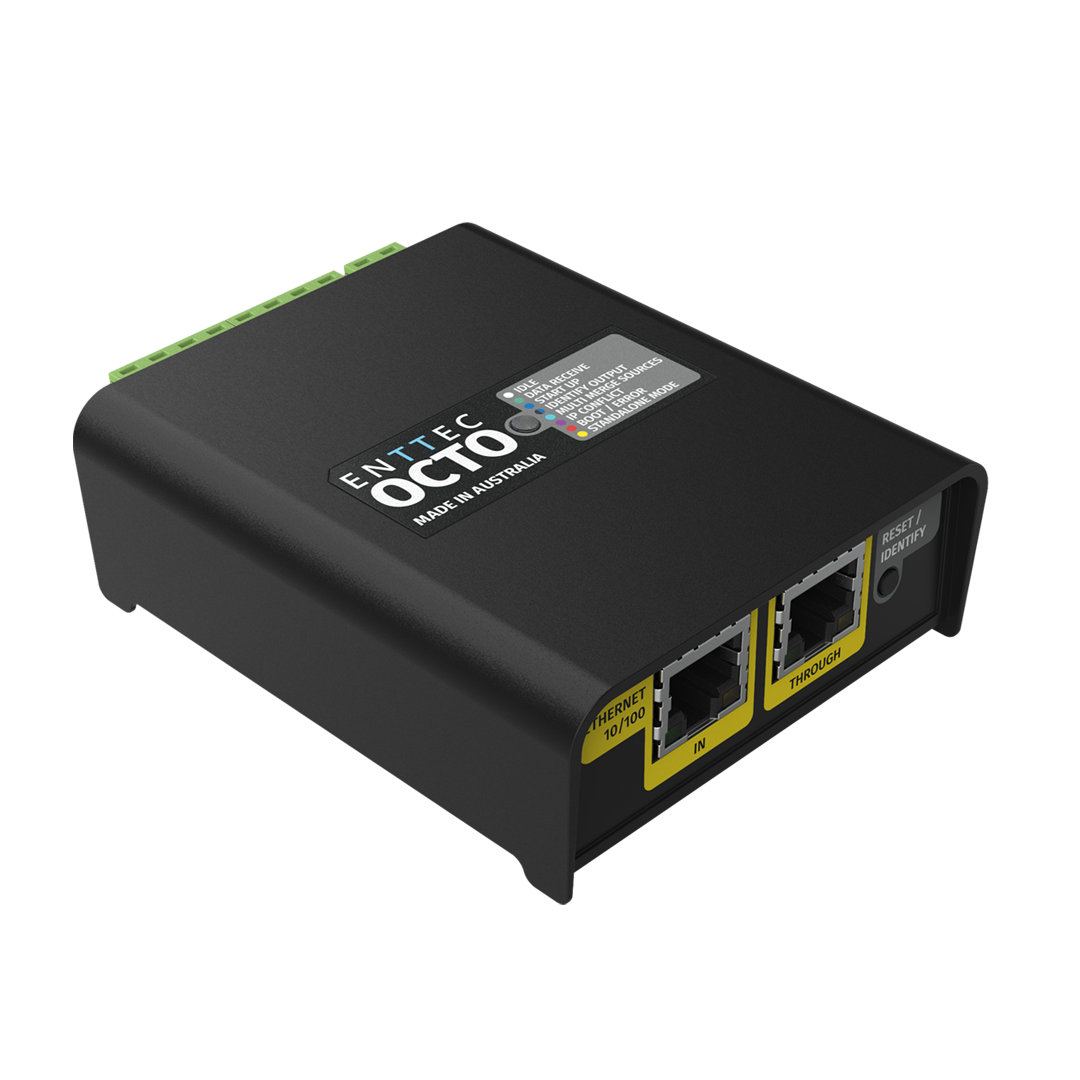
Sku: 71521
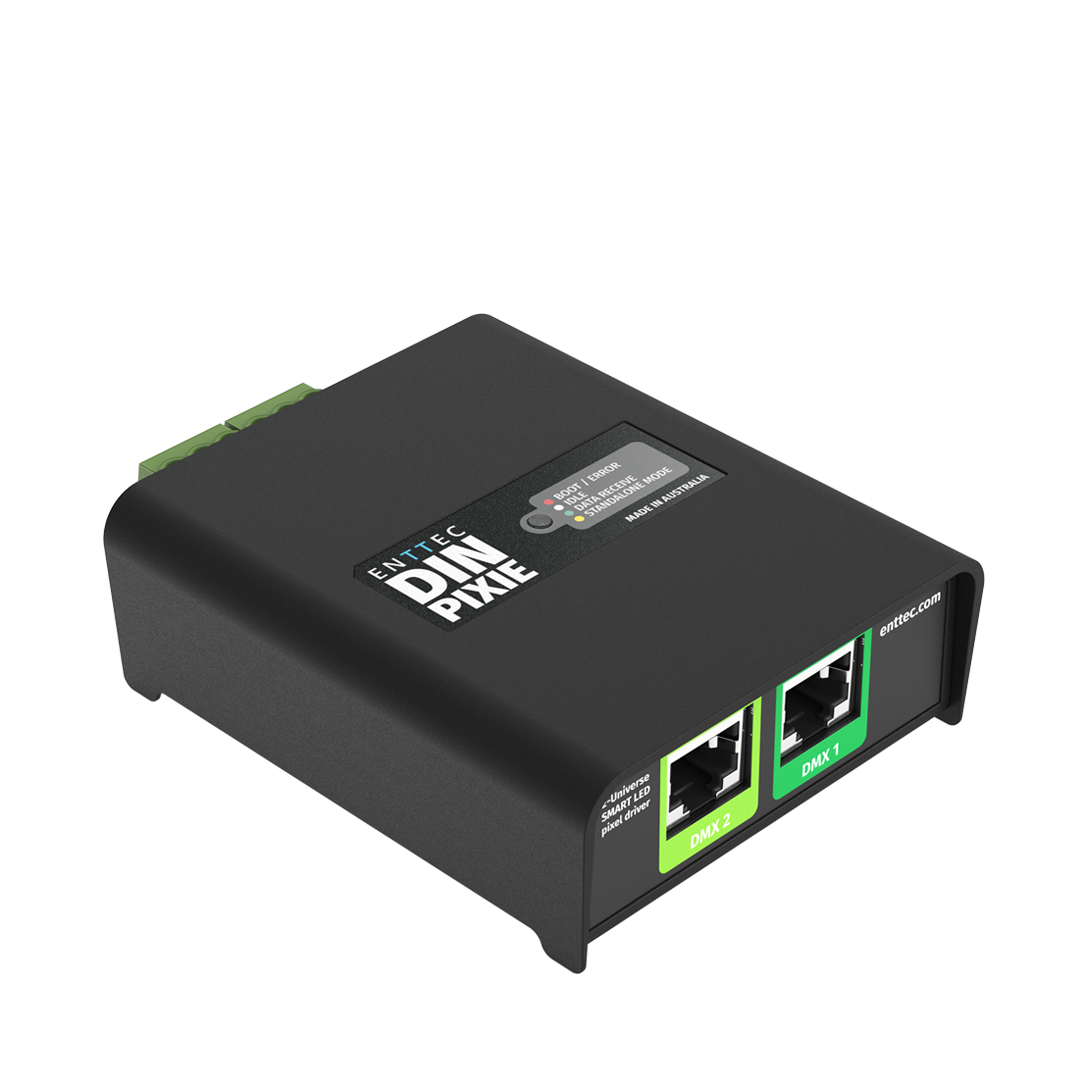
Sku: 73539
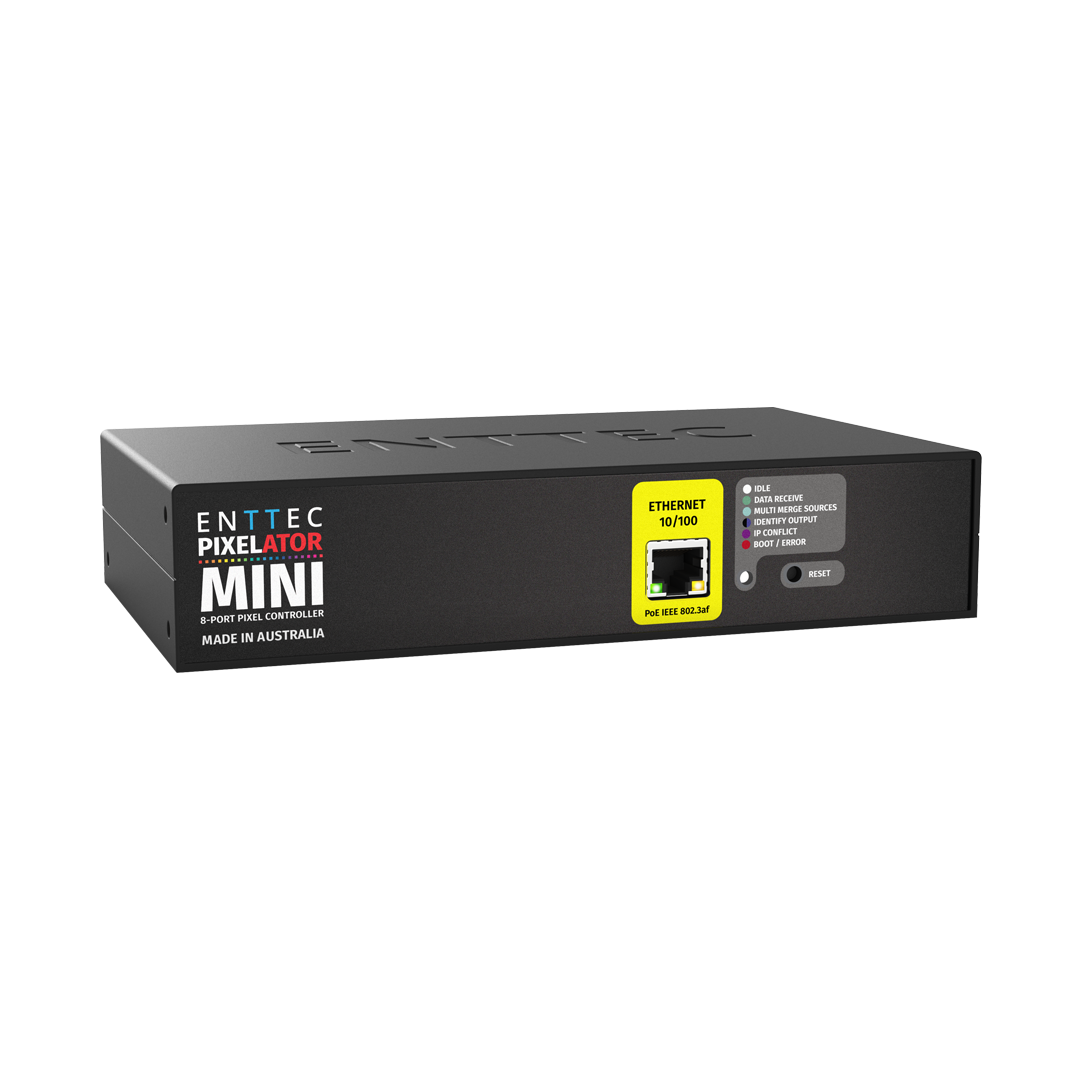
Sku: 70067
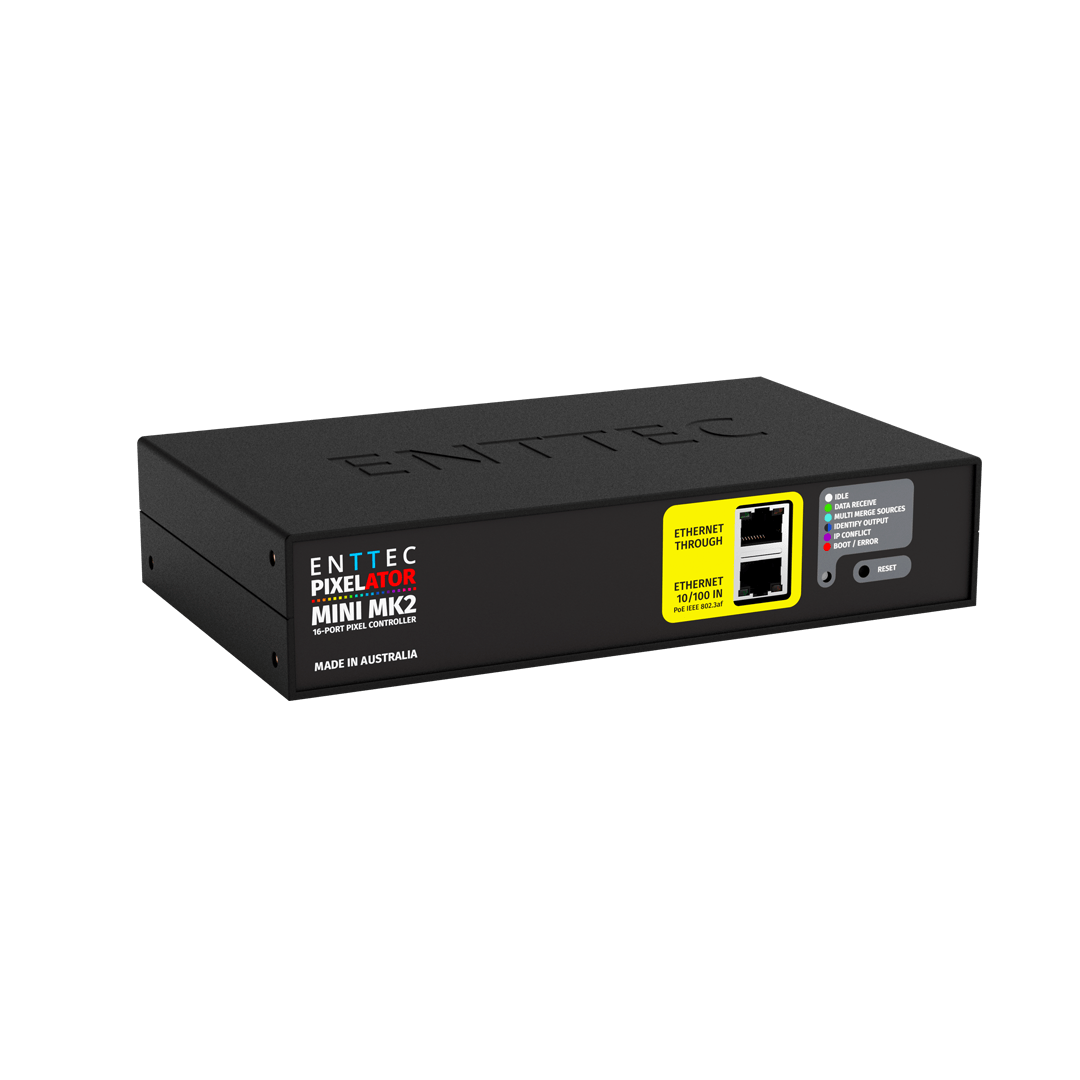
Sku: 70068
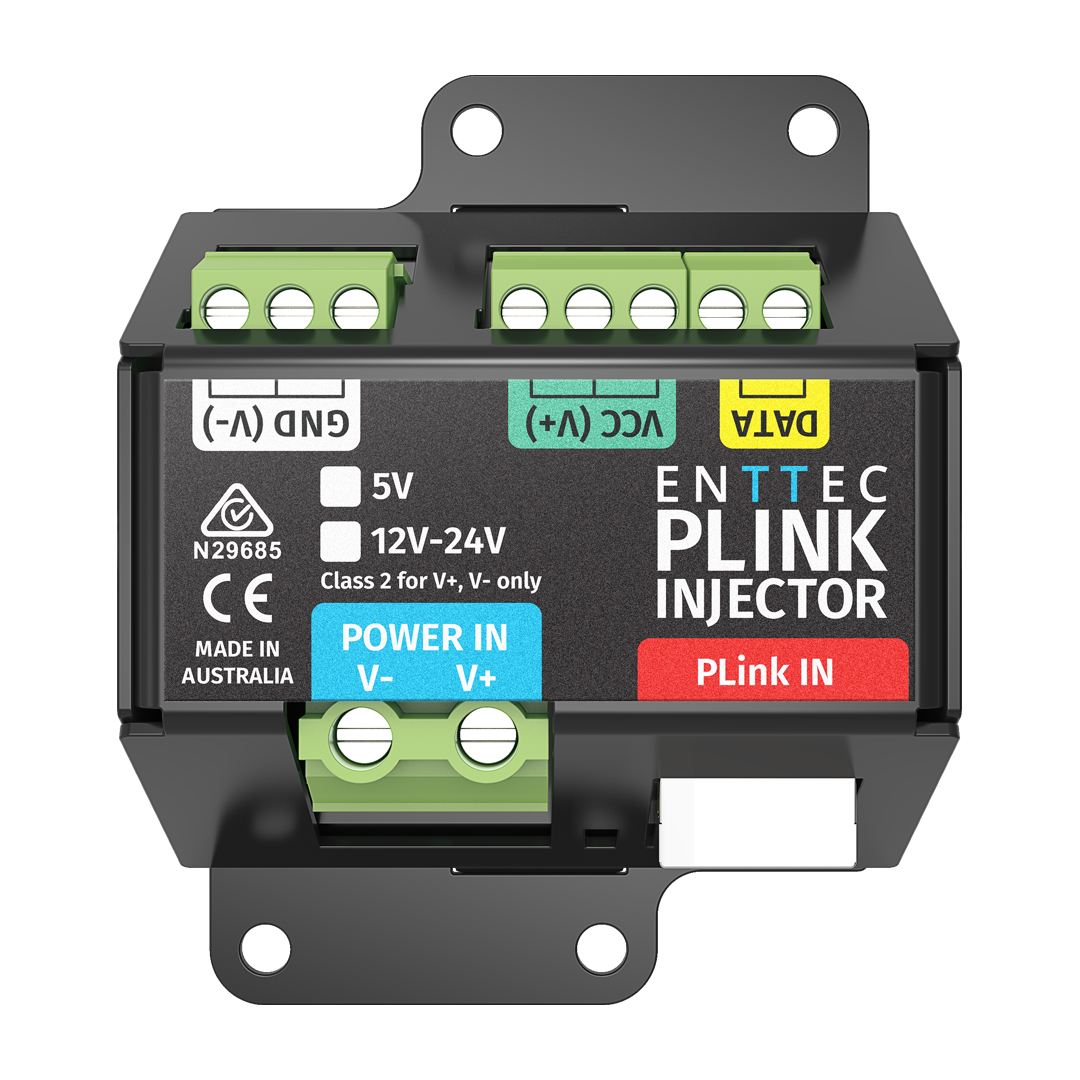
Sku: 73-545
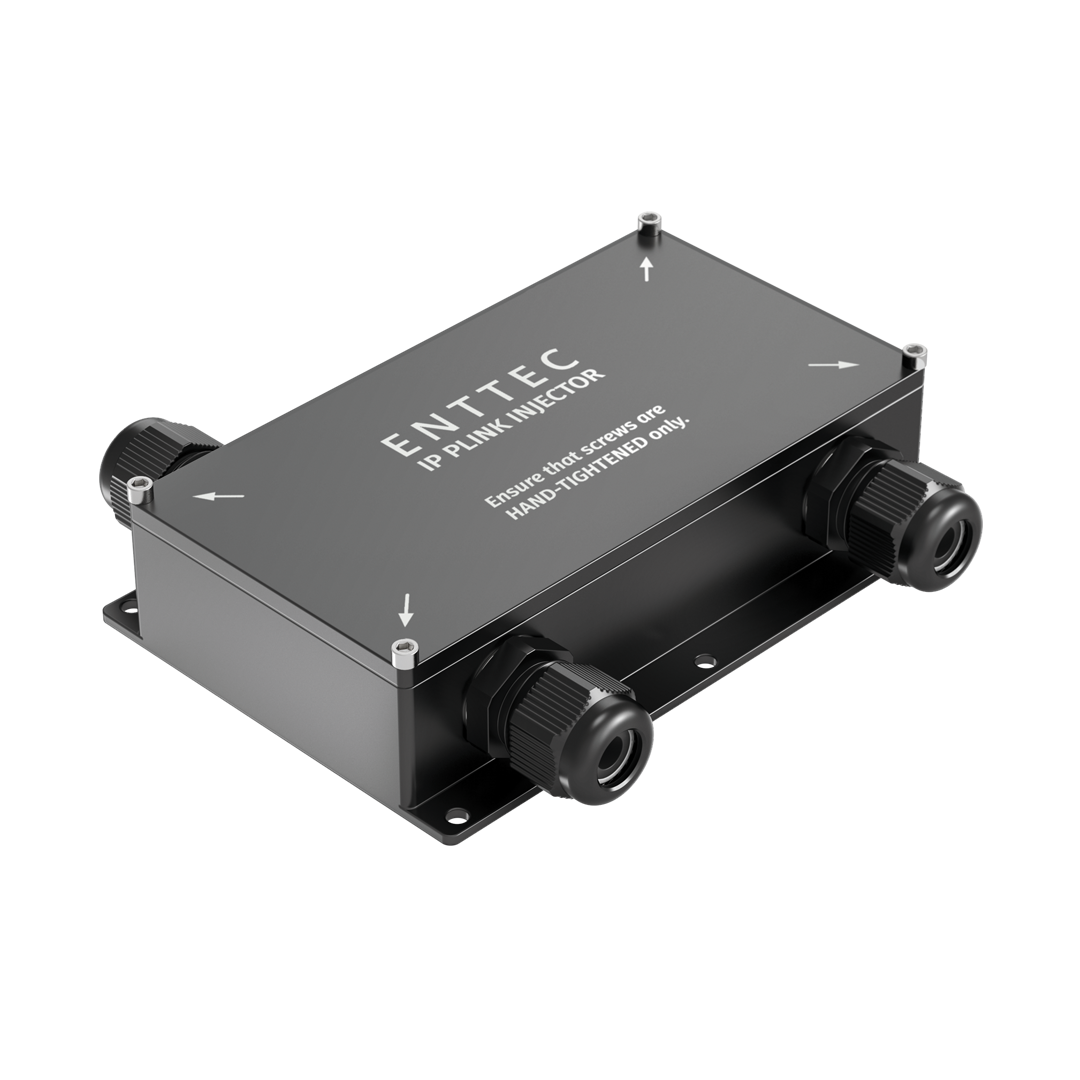
Sku: 73924
ENTTEC has been engineering lighting control in Australia since 1999, and shipping LED pixel controllers since the original Pixelator in 2014.