



UCS8903 Pixel Protocol
Manufacturer: Shenzhen UcsA single-wire, individually addressable RGB pixel IC offering 16-bit per-channel PWM colour depth over a self-clocking WS2812-style data line.
Specifications
| Specification | Detail |
|---|---|
| Clock Type | Data-Only |
| Color Resolution | 16 Bits |
| Physical Package | SOP8 |
| RGB | Yes |
| RGBW | No |
| Output Pixel Voltage | 5 - 24V |
| PWM Rate | 1000Hz |
| Suitable Camera | Up to 34fps |
| Redundant Data Line | No |
Strengths
- 16-bit per-channel PWM depth gives finer control at low brightness and smoother fades than common 8-bit single-wire chips.
- Single-wire, self-clocking wiring keeps runs simple: one data conductor plus power, with no separate clock line to route.
- Wide 5 to 24V pixel voltage rating suits higher-voltage strings for reduced current and less voltage drop over longer runs.
Limitations
- As a single-wire, self-clocking protocol the timing is sensitive: signal integrity depends on clean data edges, and with no redundant data line a single failed IC breaks the rest of the downstream chain.
- The 1000Hz PWM is comfortably camera-safe up to the rated 34fps but leaves limited headroom for higher-speed cinematography, and the part is RGB only with no dedicated white channel (RGBW: No).
Overview
The UCS8903 is a data-only, single-wire addressable RGB pixel IC in an SOP8 package. Each device self-clocks off one timing-sensitive data line (no separate clock wire) and passes pixel data down the chain, driving each of its RGB channels at 16-bit (65,536-level) resolution for smoother low-end gradients than 8-bit parts. Its rated pixel voltage spans 5 to 24V, and its 1000Hz PWM is comfortably flicker-free for capture up to 34fps. It carries no redundant data line and is RGB only, with no dedicated white channel. ENTTEC is not affiliated with Shenzhen Ucs.
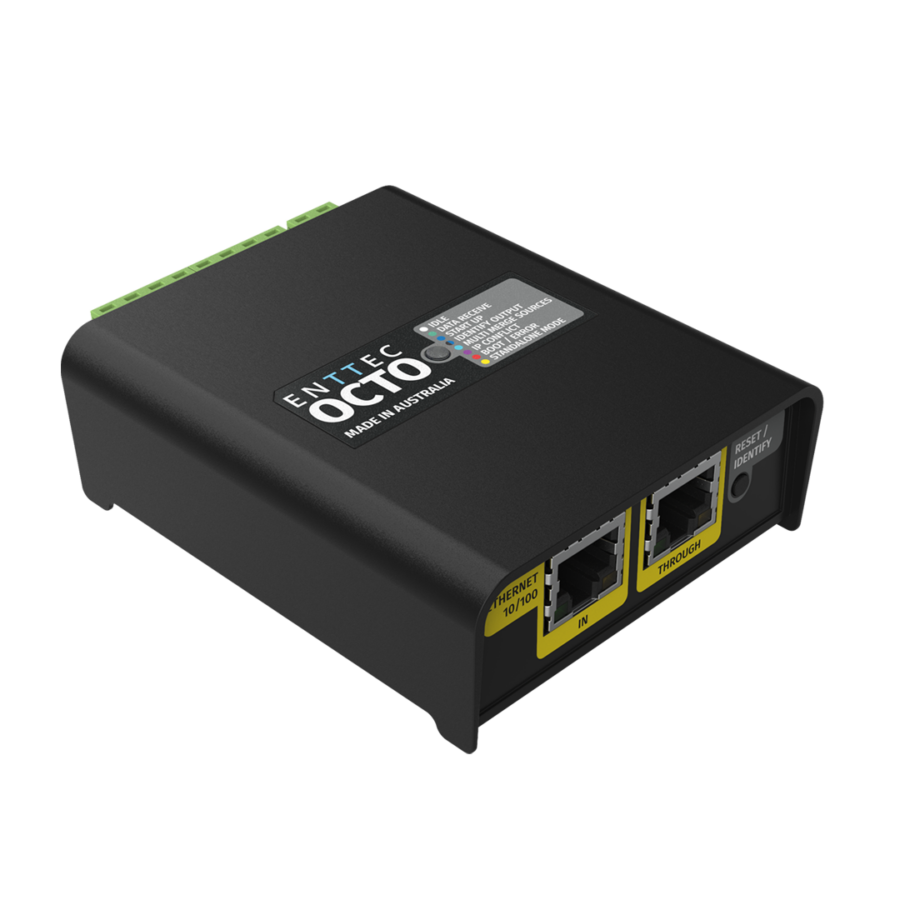
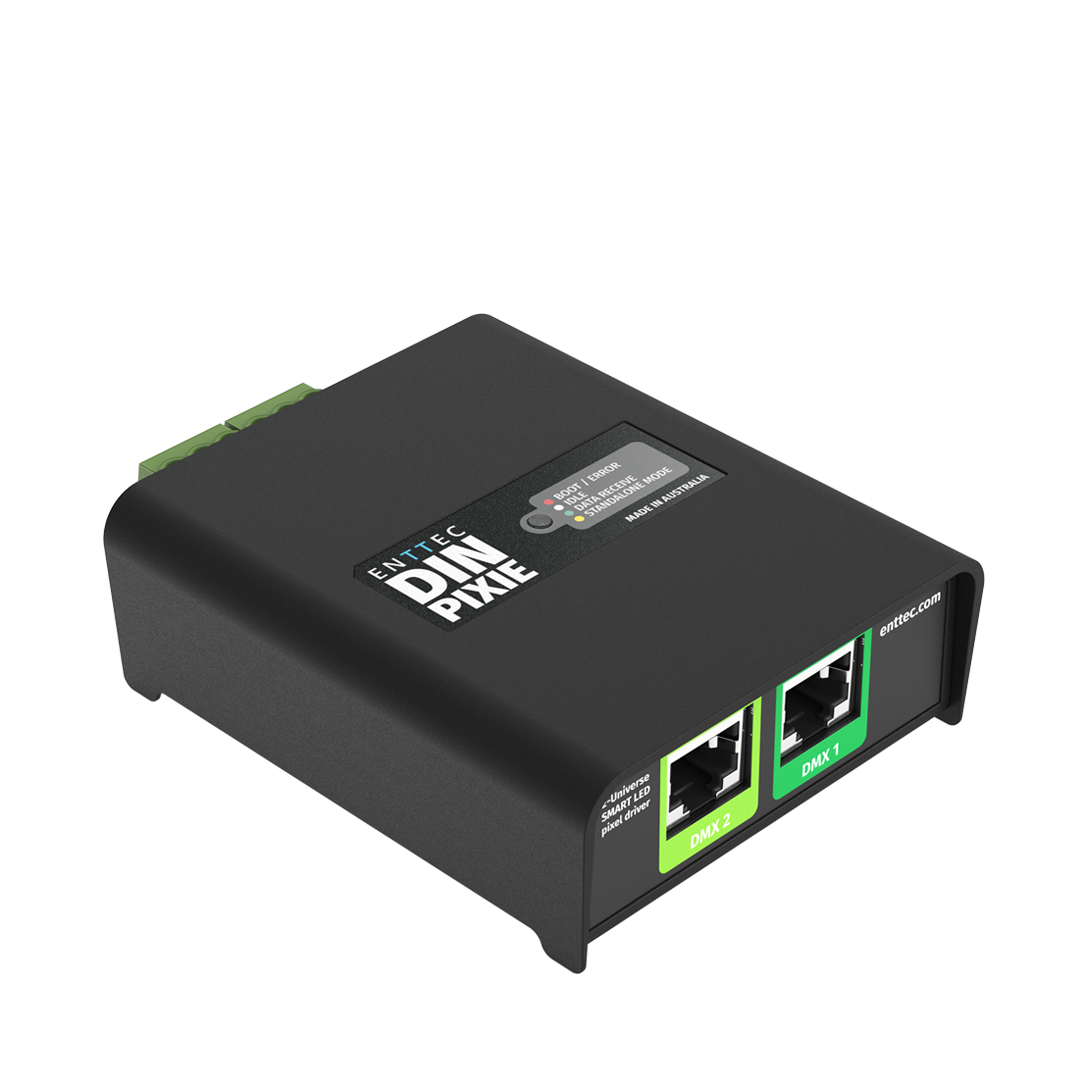
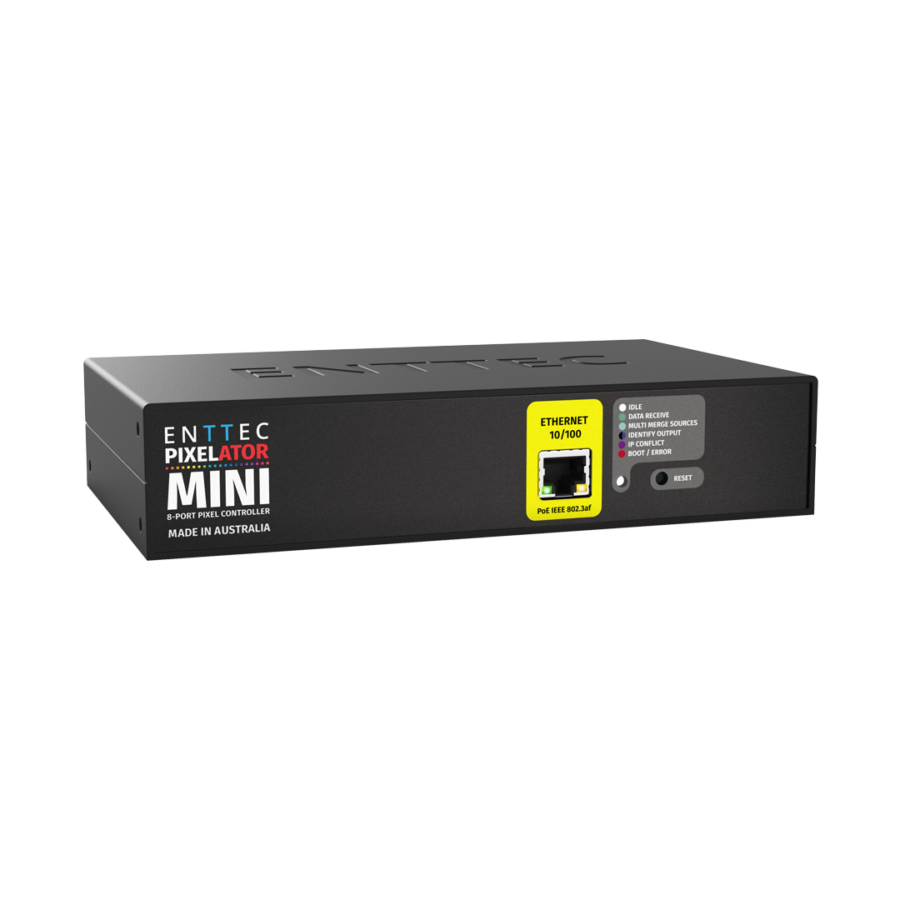
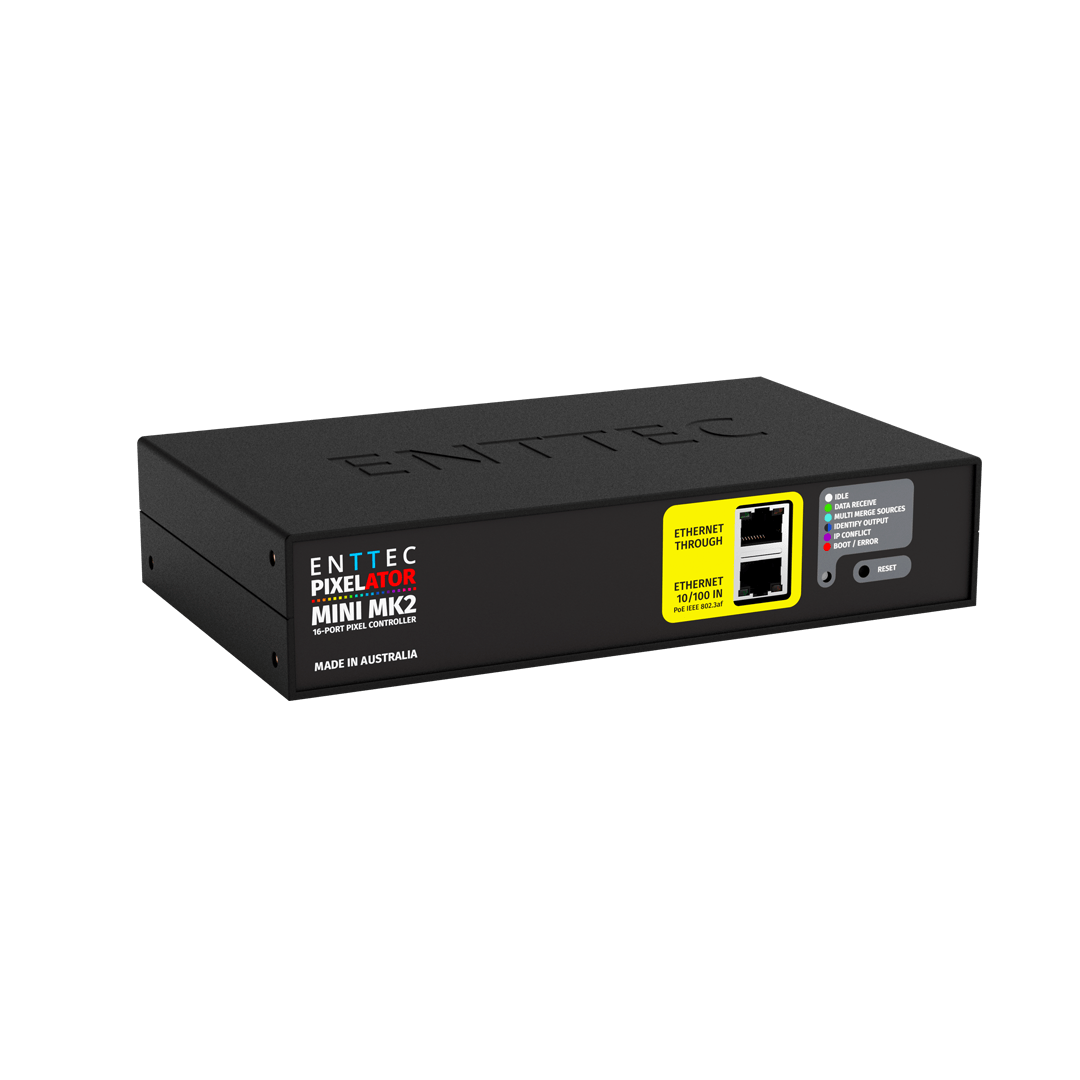
Mapping an installation? ELM, ENTTEC's free LED pixel mapping software, drives the controllers above over Art-Net and sACN, from a single fixture to building-scale maps.
ENTTEC has been engineering lighting control in Australia since 1999, and shipping LED pixel controllers since the original Pixelator in 2014.